Start with what the client actually said.
The kickoff conversation becomes a playbook with the role, candidate profile and search criteria. Your team reviews the direction, and agents build the sourcing campaign from it.
Recruiting
Add the intake transcript and agents build the playbook and sourcing campaign. They find candidates, write and run outreach, follow up and book interviews. Your recruiters assess the people, and what they learn helps guide the next sourcing pass.
Inside Trovero
The intake gives agents the direction. Candidate recommendations explain the fit. Conversations and decisions stay with the search.
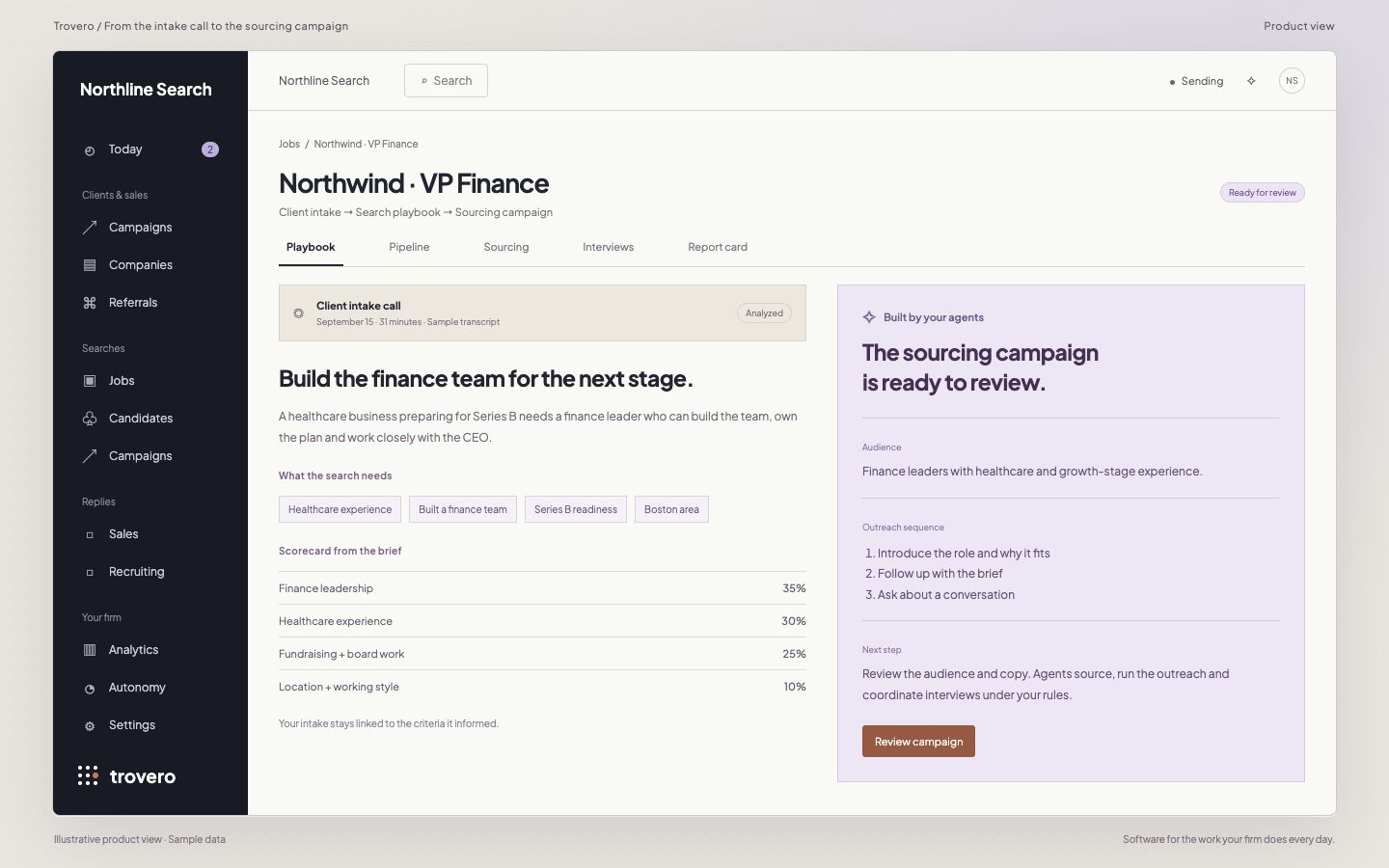
Intake → campaign
Add the intake transcript. Agents build the playbook and sourcing campaign around what the client needs. Review the direction, then let agents find candidates, run outreach and book interviews.
Illustrative product view. Sample data.
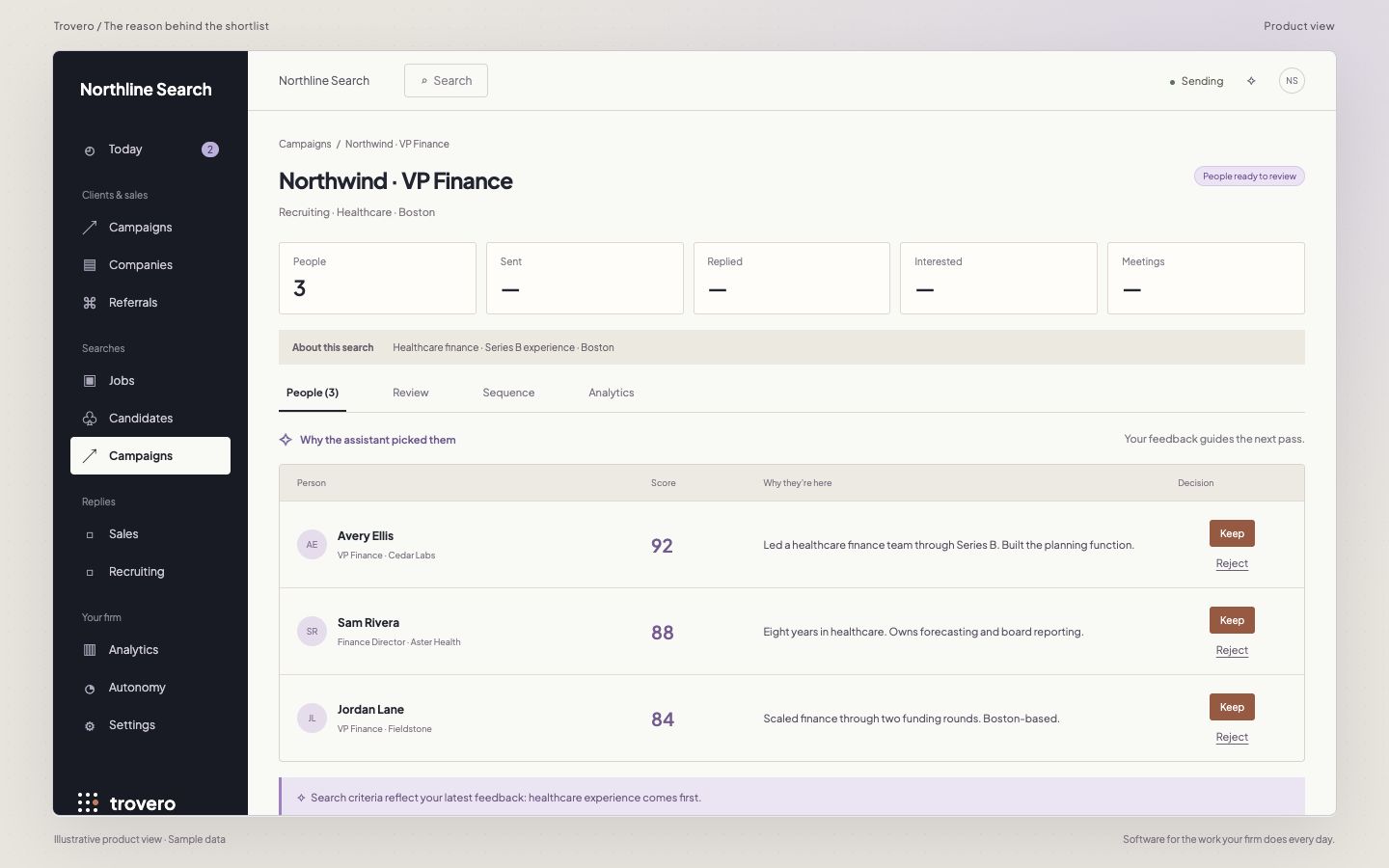
Candidate fit
Agents source against the search brief and explain their recommendations. Your recruiters assess the people, refine the direction and spend their time on the conversations that matter.
Illustrative product view. Sample data.
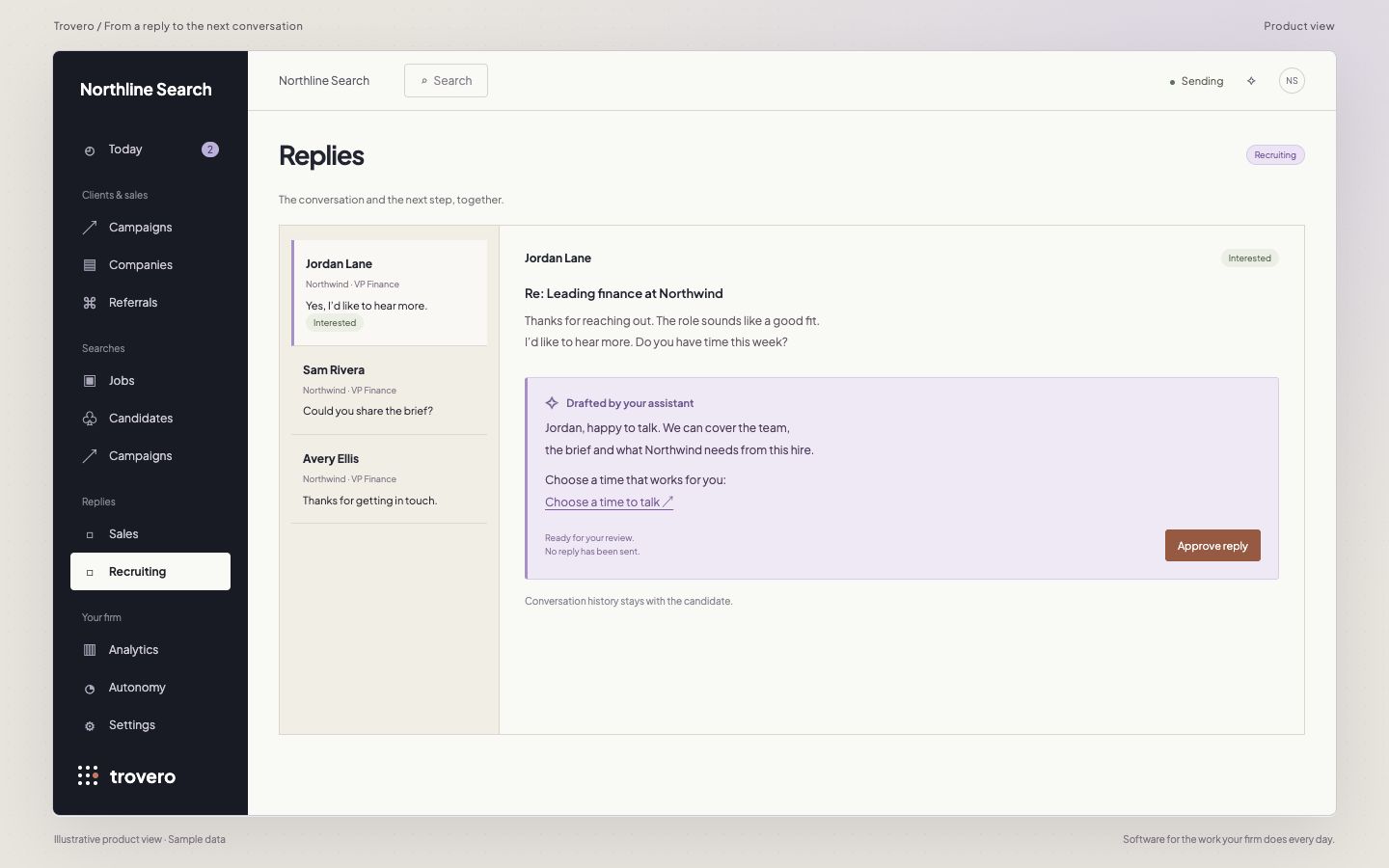
Replies + decisions
Agents handle the follow-through. When a reply needs your judgment, the conversation and a proposed next step are ready together. This example shows a scheduling draft awaiting a decision.
Illustrative product view. Sample data.
A search that learns from the work
The brief is the starting point. What recruiters and clients learn becomes direction for the work that follows.
The kickoff conversation becomes a playbook with the role, candidate profile and search criteria. Your team reviews the direction, and agents build the sourcing campaign from it.
Agents source against the playbook, explain the fit, create messages, run outreach and follow-ups, and book interviews within your rules. The person and the conversation stay in the same search.
A promising profile can look different after a conversation. Interview insights and candidate feedback help refine the criteria and the next sourcing pass. Recruiters remain responsible for assessing fit and making recommendations.
LinkedIn, within your workflow
Open the person’s profile from Trovero and copy the prepared message. You paste and send it yourself in LinkedIn. The step stays tracked alongside agent-run outreach in your campaign and Today.
The client decision
Share the board, brief, feedback and performance in the client view. Your client can see the choices in front of them. Your team can act on the response, and agents can use the resulting direction in the next sourcing pass.
Explore the client experienceEarly access
Request beta access or apply for a design partner interview. We’ll review your application and contact you about next steps.
Explore the design partner program